Computational thinking
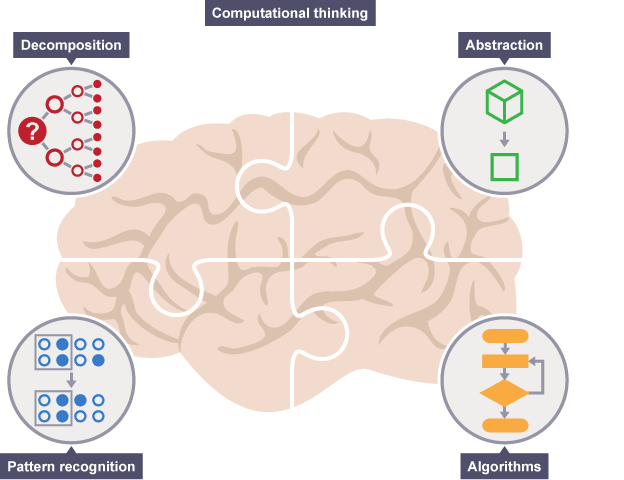
Taking a complex problem, understanding the possible solutions and then presenting the solutions in a way that a computer could understand is computational thinking. (BBC, 2019)
According to Jeannette M. Wing, “Computational thinking involves solving problems, designing systems, and understanding human behavior, by drawing on the concepts fundamental to computer science. Computational thinking includes a range of mental tools that reflect the breadth of the field of computer science.” In other words, computational thinking focuses on problem-solving skills and trial and error exploration.
It is important to view technology literacy as distinct from the problem solving that computational thinking brings.
Creativity and CT
Importantly CT creates knowledge rather than just using information from technology.(Deschryver & Yadav, 2015) “using new literacies and computational thinking to frame learning activities provides many foundational skills that naturally scaffold creative thinking.” The problem solving process that is undertaken when thinking computationally pushes creative solutions that facilitate passing the liminal phases of learning.
Pedagogical opportunities
Cross curricular example. A CT class could have students find a way to automate the data collection they need for another class. e.g. generating a heat map of battles in the American civil war.
Robots and robotic systems are currently used as educational tools but mostly in extra-curricular and outside school contexts (Savard & Freiman, 2016). There are calls for the integration of robots in classrooms to expand the reported benefits of working with robots for children and youth.
The use of LEGO Mindstorms allows students to showcase their creative problem solving with a wide variety of constructions. Although the individual automatons the students build may vary significantly educators are able to see asses-able evidence of computational thinking. The EV3 software package that is used to program the Mindstorms devices presents algorithms to students in an easily digestible format.

Just for fun here is an example of children encountering computational thinking for the first time.
Deschryver, Mike & Yadav, Aman. (2015). Creative and Computational Thinking in the Context of New Literacies: Working with Teachers to Scaffold Complex Technology-Mediated Approaches to Teaching and Learning. Journal of Technology and Teacher Education. 23. 411-431.
Savard, Annie & Freiman, Viktor. (2016). Investigating Complexity to Assess Student Learning from a Robotics-Based Task. Digital Experiences in Mathematics Education. 2. 10.1007/s40751-016-0016-6.
Wing, J. M. (2006). Computational Thinking. Communications of the ACM, 49(3).

 Digital Creativity and Learning
Hi Jacob,
I enjoyed reading your post! Computational thinking is absolutely a skill for the 21st century, and I thought it was great how you discussed how it can be fostered within the classroom.
For LEGO Mindstorms, do you recommend a certain stage or age of students for this technology to be introduced? Do you, for example, Stage 3 students would struggle?
All the best,
Ashleigh
LikeLike